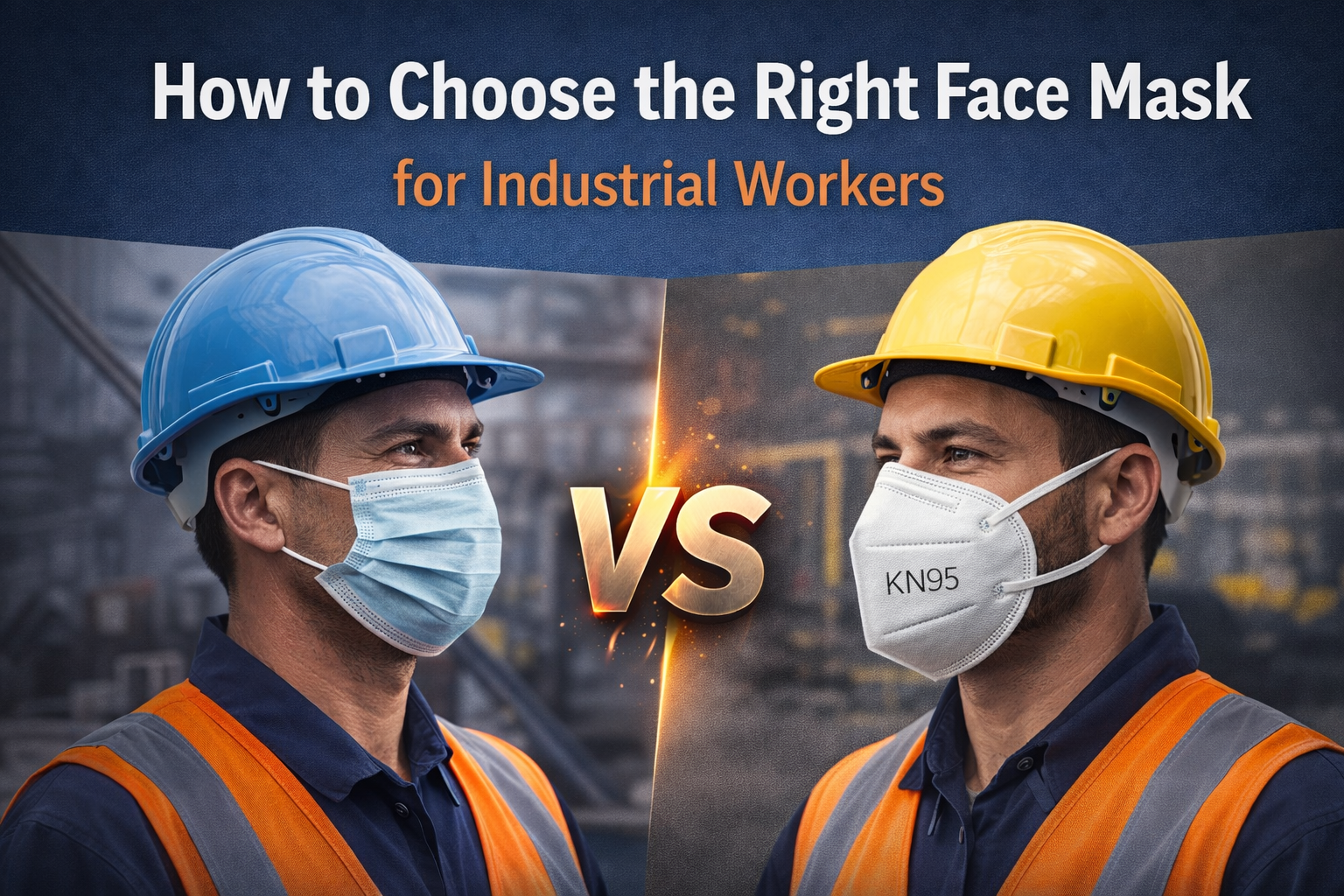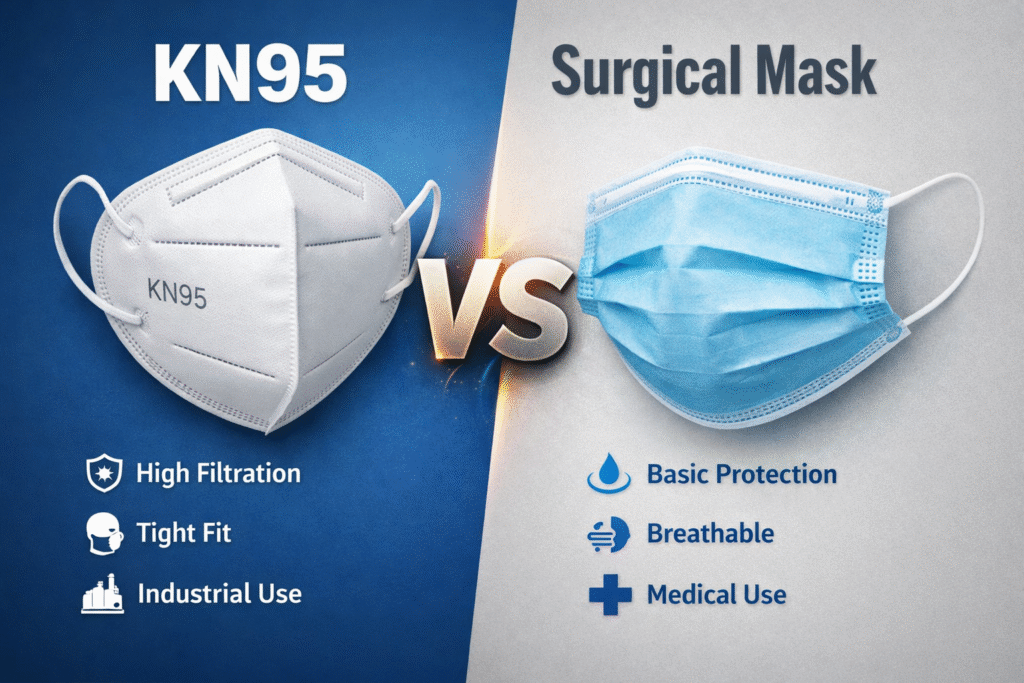
Choosing between a KN95 mask and a surgical mask is not just a technical decision. In real procurement scenarios, it directly affects compliance, cost efficiency, worker safety, and even project approval.
Across industrial projects, healthcare procurement, and international sourcing, many buyers struggle with this decision—not because options are limited, but because the difference between KN95 and surgical masks is often misunderstood or oversimplified.
This article looks at the decision from a buyer’s perspective, focusing on real-world use cases rather than product marketing.
Why This Decision Matters
In many projects, selecting the wrong type of mask does not immediately cause visible problems. The issues usually appear later—during inspections, audits, or daily operations.
Some buyers choose higher-grade masks than necessary, increasing cost without adding value. Others choose lower-grade protection where regulations or risk levels require more. Both situations lead to inefficiency, compliance risks, or worker dissatisfaction.
Understanding what each mask is actually designed to do is the key to making the right decision when choosing between a KN95 mask vs surgical mask.
What Are We Really Comparing?
This comparison is not about which mask is “better,” but about which one fits the intended application.
| Category | Surgical Mask | KN95 Mask |
|---|---|---|
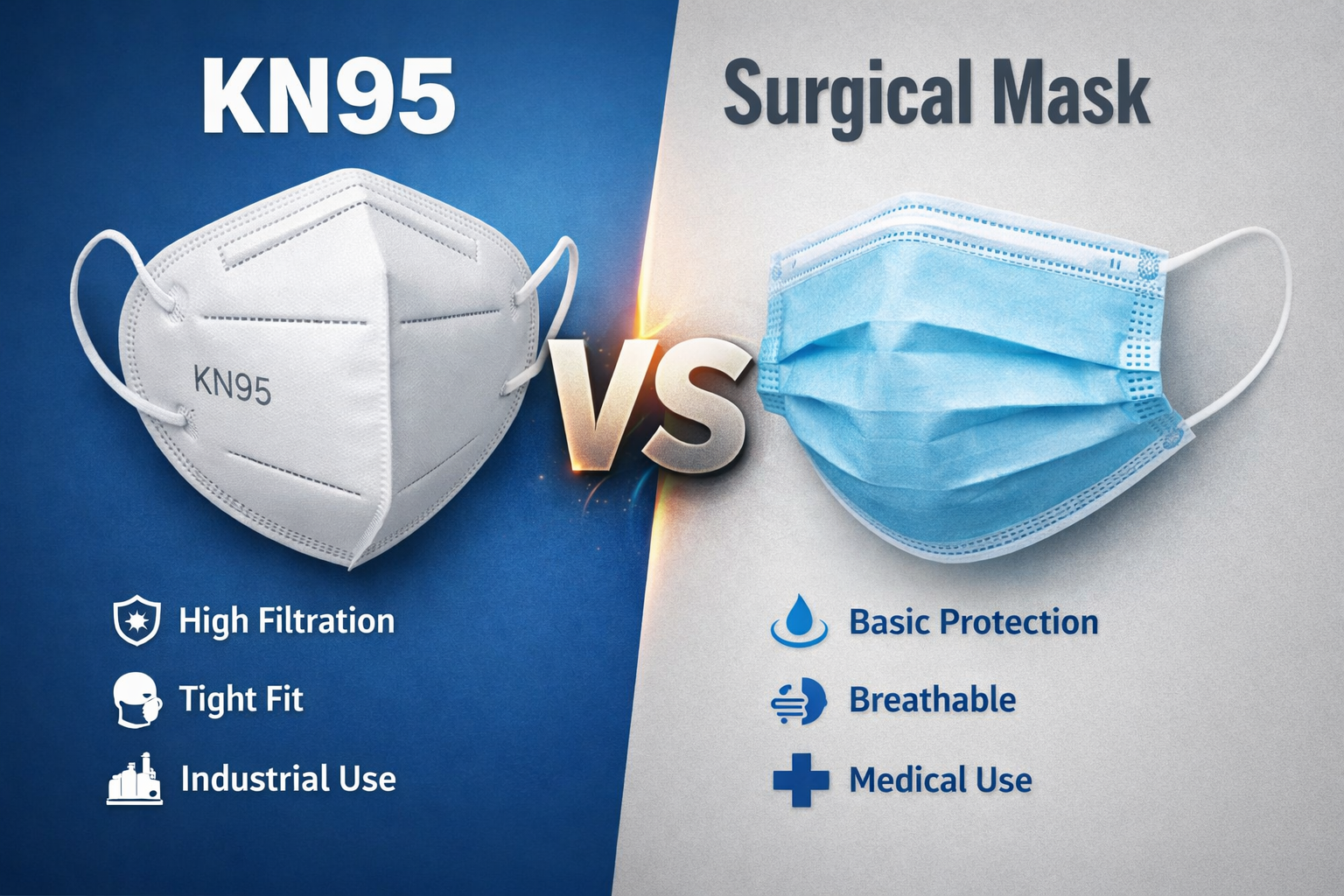
| Primary Function | Reduce the spread of droplets and protect against splashes in controlled environments | Filter airborne non-oily particles with high efficiency (≥95%) |
| Common Use Cases | Medical and healthcare facilitiesClean working environmentsPublic and service-related settings | Construction and infrastructure projectsMining and industrial environmentsWorkplaces with dust, smoke, or fine particles |
| Key Characteristics | Good breathabilityBasic barrier protectionCost-efficient for large-volume use | Tighter facial sealHigher filtration performanceCompliance with GB2626 respiratory protection standards |
| Limitations | Does not provide a tight facial sealNot designed to filter fine airborne particles | Not designed for sterile medical environmentsLess comfortable for long-term wear |
KN95 Mask and Surgical Mask Key Differences Decision Factors
Factor | Surgical Mask | KN95 |
|---|---|---|
| Primary protection | Droplets / splashes | Fine particles |
| Fit | Loose | Tight |
| Breathability | High | Medium |
| Comfort for long wear | High | Medium |
| Cost level | Lower | Higher |
| PPE classification | No | Yes |
| Typical usage | Medical / public | Industrial / occupational |
What Buyers Often Overlook
Many procurement mistakes happen not because of poor products, but because of incorrect assumptions.
A KN95 is not a medical mask and should not replace one in clinical settings.
A surgical mask is not designed to protect against dust or industrial particles.
Higher filtration does not automatically mean better suitability.
Regulatory compliance depends on application, not just certification.
Real-World Application Examples
Construction and mining projects
→ KN95 is typically required due to dust exposure.Hospitals and healthcare facilities
→ Surgical masks are more appropriate for routine use.Infrastructure projects in Africa or South America
→ KN95 is often mandated as part of PPE requirements.Public or service environments
→ Surgical masks provide adequate protection at lower cost.
Common Misunderstandings
“N95 is better than KN95.”
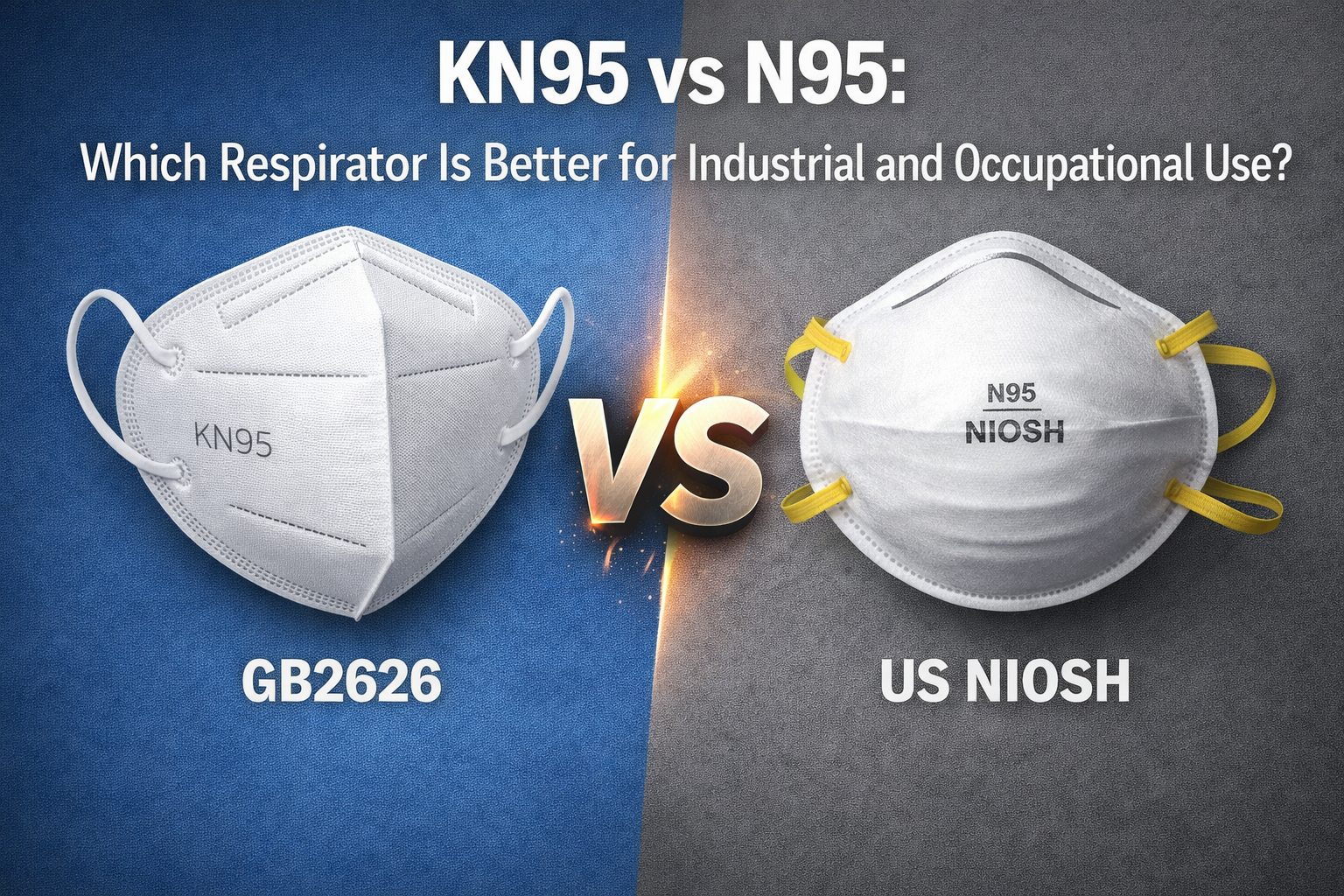
They follow different national standards but offer similar filtration performance.
“KN95 can replace all medical masks.”
It cannot. It is not designed for sterile or clinical procedures.
“Higher protection always means safer.”
Only when it matches the actual exposure risk.
Final Guidance
If your priority is:
Occupational safety → choose KN95
Medical or hygiene compliance → choose a surgical mask
Cost control with sufficient protection → match the mask to the actual risk level
The right choice is not about using the highest grade—it’s about using the right one.
FAQ
Can KN95 be used in hospitals?
Only in non-clinical, non-sterile areas.
Is KN95 equivalent to N95?
They follow different standards but offer comparable filtration performance.
Which is better for long working hours?
Surgical masks are generally more comfortable for extended wear.