Many B2B buyers purchase disposable surgical masks1 regularly, yet still rely on suppliers to recommend a “standard” model.
The problem is that standard specifications are designed to be safe and universal — not competitive.
Suppliers often default to familiar configurations because they are fast to quote and easy to produce. However, these recommendations rarely reflect the actual decision signals in your target market. As a result, buyers receive compliant products that do not improve channel performance or differentiation.
To choose the right surgical mask for your market, the focus must shift from standard compliance to market-specific performance signals.
How Do You Choose the Right Surgical Mask for Your Market?
The key is to define what your buyers actually value before asking for quotations.
Different markets prioritize different signals, such as:
- Compliance with EN 146832 (Type I / II / IIR)
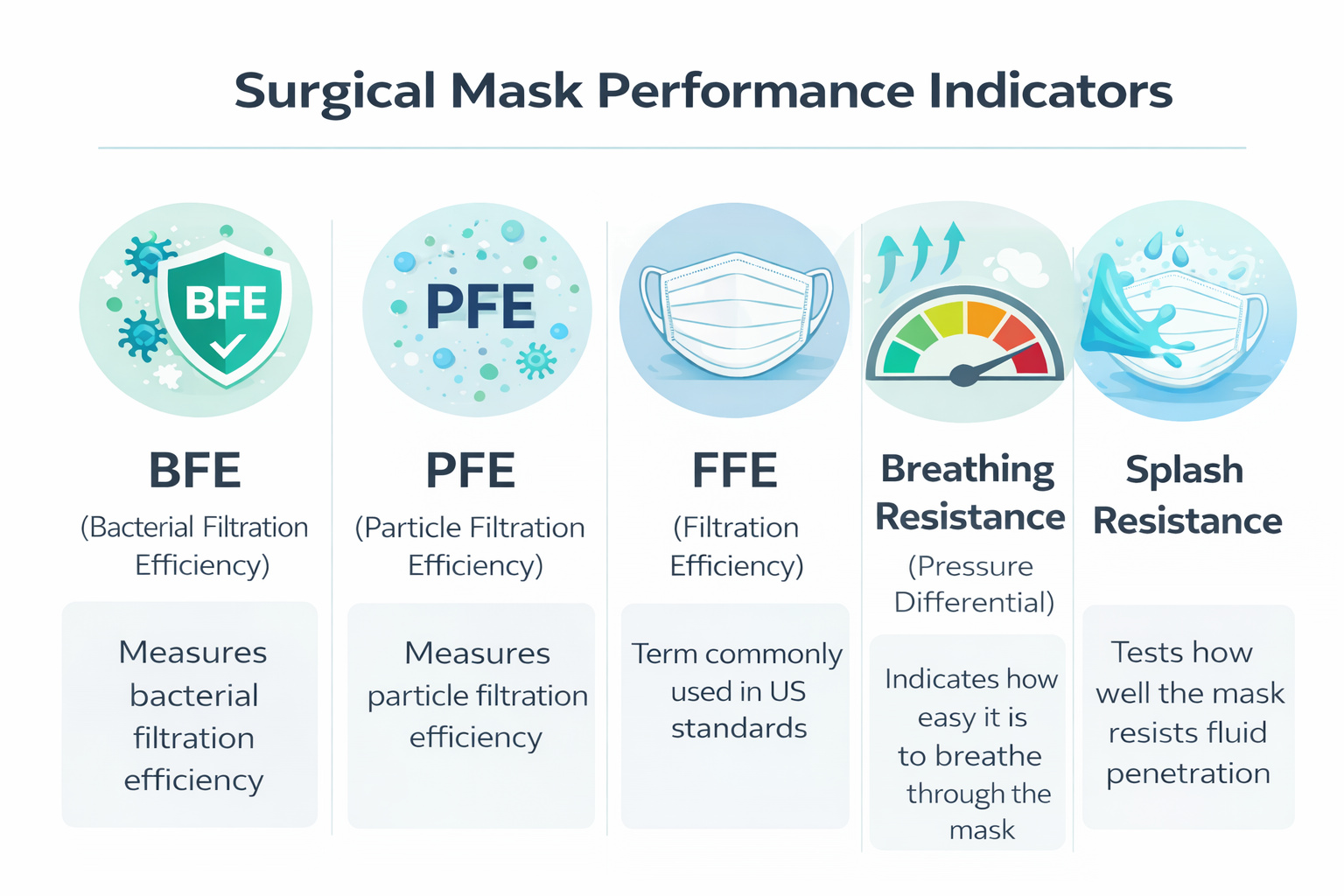
- Filtration indicators like BFE / PFE / VFE
- Comfort-related factors such as breathability, earloop elasticity, and fabric feel
When these priorities are unclear, suppliers default to generic recommendations. When they are clear, supplier communication becomes faster and outcomes improve significantly.
Why Market Signals Matter More Than “Standard Specs”
I once worked with a buyer from Thailand supplying pharmacy chains. Their customers strongly valued BFE, PFE, and VFE performance — closely aligned with expectations in the Japanese market.
The product did not strictly follow EN 146832 medical classifications, yet it performed extremely well commercially because it matched buyer expectations and communicated the right signals on packaging and documentation.
This is a common pattern:
Success comes from matching local decision signals, not from blindly following global standards.
How Should B2B Buyers Define the Market Signal Before RFQ?
Before requesting quotations, align internally on three questions:
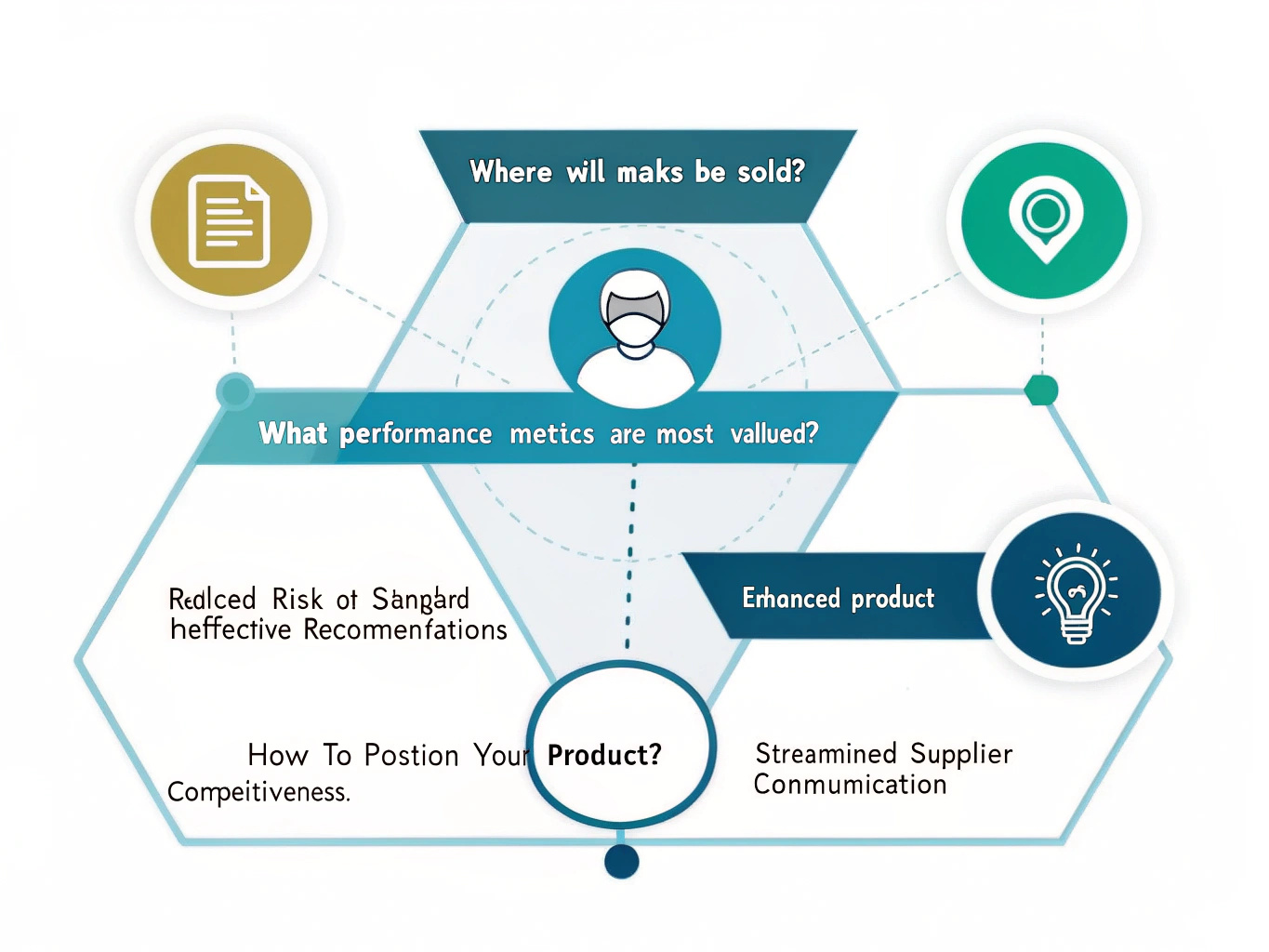
Where will the masks be sold?
(Hospitals, pharmacies, tenders, distributors, retail, export)What is the buyer’s decision signal?
(EN 14683 type, filtration metrics, comfort, price stability)What claims will appear on packaging and documents?
(Certificates, test reports, labeling language)
Once these are defined, supplier communication becomes clearer, faster, and far less prone to “wrong but standard” recommendations.
EN 14683: Which Type Should You Choose?
If your market requires EN 146832 compliance, focus on measurable thresholds, not general descriptions.
Key parameters include:
- Bacterial Filtration Efficiency (BFE)
- Differential pressure (breathability)
- Splash resistance3
- Microbial cleanliness (bioburden)
####### EN 14683 Technical Comparison
| Requirement | Type I | Type II | Type IIR |
|---|---|---|---|
| Bacterial Filtration Efficiency (BFE)4 | ≥ 95% | ≥ 98% | ≥ 98% |
| Differential Pressure (ΔP) | < 40 Pa/cm² | < 40 Pa/cm² | < 60 Pa/cm² |
| Splash Resistance | Not required | Not required | ≥ 16.0 kPa |
| Microbial Cleanliness | ≤ 30 CFU/g | ≤ 30 CFU/g | ≤ 30 CFU/g |
Important:
Type IIR is not simply a “better” Type II. Splash resistance increases material treatment complexity and can reduce comfort. Choose Type IIR only when fluid exposure is part of the actual use scenario — otherwise, it may raise costs without improving sales.
A Simple Decision Framework That Improves Competitiveness
When buyers are unsure, they default to “standard.” That is exactly where competitiveness is lost.
A more effective approach:
- Identify the primary market signal
(EN 146832, BFE/PFE/VFE, or comfort) - Benchmark what competitors already sell
- Set one or two improvement targets that matter
- Approve samples before bulk production
This shifts sourcing from basic purchasing to controlled product development.
How Does Competitor Benchmarking Improve Mask Performance?
Competitor benchmarking is the fastest real-world method to refine a product for your channel.
Instead of guessing, you measure what the market already accepts — and improve selectively.

######## Competitor Benchmarking Workflow
| Step | Action | Supplier Evaluation Focus |
|---|---|---|
| 1 | Buy 2–3 competing masks | What buyers already accept |
| 2 | Ship samples to supplier | Packaging & batch reference |
| 3 | Request structured evaluation | Fabric feel, color tone, earloop elasticity |
| 4 | Define “match & improve” | One improvement that matters |
| 5 | Approve samples | Consistency before bulk |
This process turns a generic mask into a product that performs better in real channels.
OEM & Private Label: What Actually Changes Buying Decisions?
OEM adds value only when it supports conversion — not when it only adds decoration.
In most B2B channels, the OEM elements that matter most are:
- Clear and compliant packaging communication5
- Stable fit and material feel
- Consistent breathability across batches
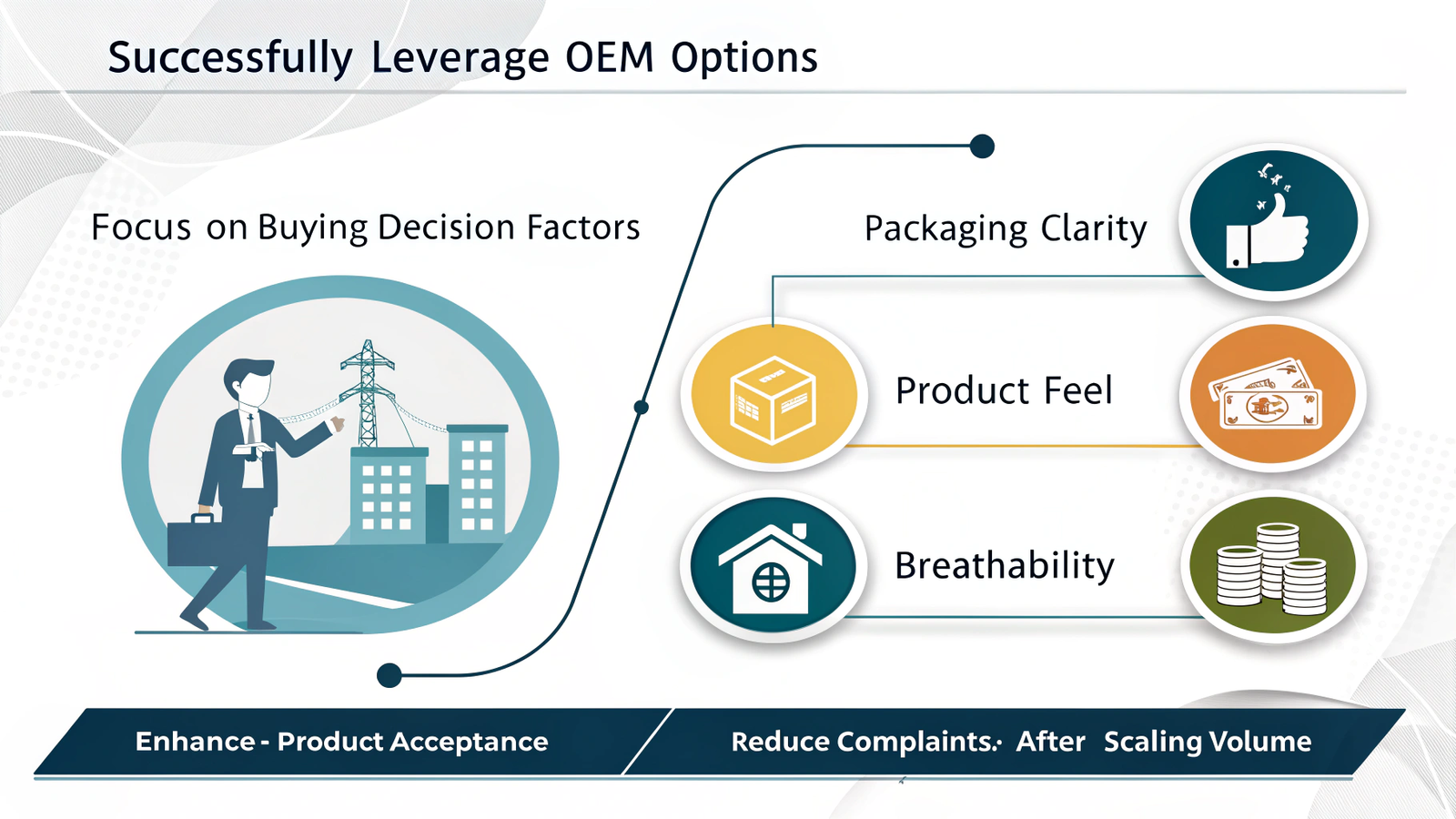
Lock performance targets early and finalize packaging details before scaling volume. This prevents hidden delays and post-launch complaints.
Bulk RFQ: What Should You Include?
To receive accurate quotations and avoid misunderstandings, include:
- Target market and sales channel
- Standard approach (EN 146832 type or filtration targets)
- Key performance priorities
- Mask structure and materials
- Packaging format and labeling language
- Documents required
- Trial quantity and monthly forecast
Clear RFQs reduce back-and-forth and improve supplier execution quality.
Conclusion
Choosing the right surgical mask is not about selecting the highest standard — it is about selecting the right signal for your market.
By defining buyer priorities, benchmarking competitors, and applying OEM strategically, B2B buyers can transform a standard product into one that performs better commercially and scales more reliably.
Explore this resource to understand the nuances of selecting the right disposable surgical masks for your needs. ↩
Gain insights into EN 14683 standards and classification requirements. ↩
Understanding splash resistance helps determine when Type IIR is truly necessary. ↩
Learn why BFE remains a core filtration benchmark in many markets. ↩
Packaging clarity plays a critical role in buyer trust and repeat orders. ↩