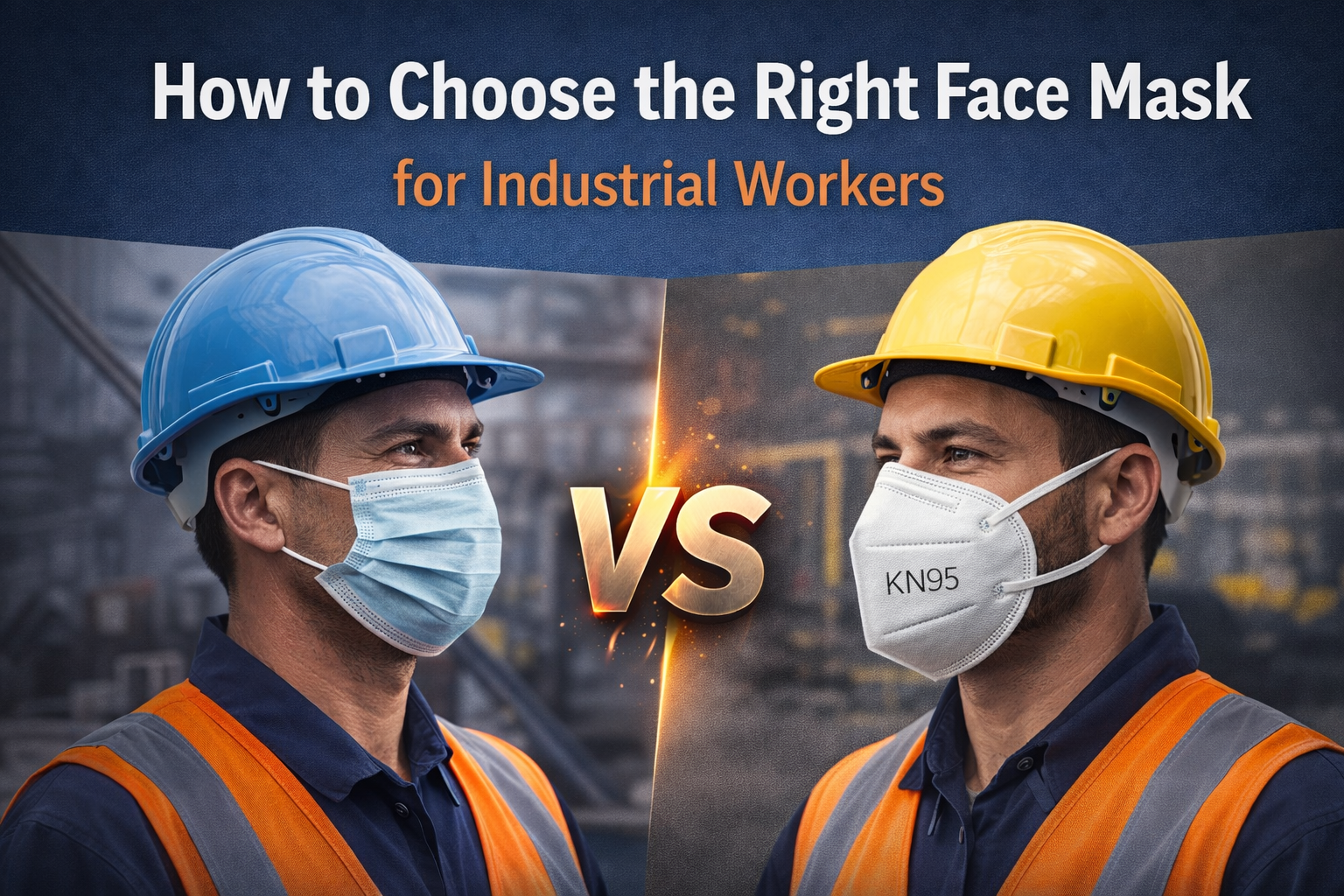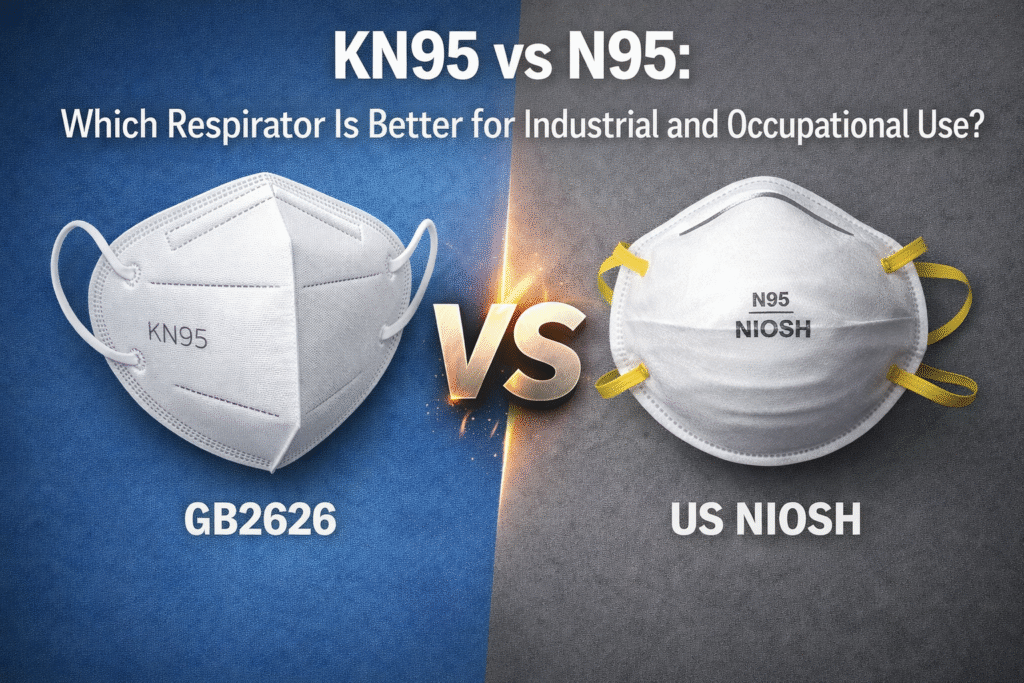
Choosing between KN95 mask and N95 respirators is a common challenge for procurement teams working in construction, manufacturing, and infrastructure projects.
While both are designed to provide high-level particulate protection, they are governed by different standards and are often used in different regulatory and commercial contexts.
This article explains the practical differences between KN95 masks and N95, focusing on real-world usage rather than laboratory definitions.
Why This Comparison Matters in Real Projects
In many industrial projects, the decision between KN95 and N95 is not driven by performance alone—it is influenced by regulatory acceptance, cost structure, availability, and supply chain stability.
Choosing the wrong standard can result in:
Compliance issues during audits
Delays in project approval
Increased procurement cost
Rejected PPE during inspections
Understanding how these two respirators differ in practice helps avoid unnecessary risk.
What Are KN95 and N95 Respirators?
KN95 Respirator
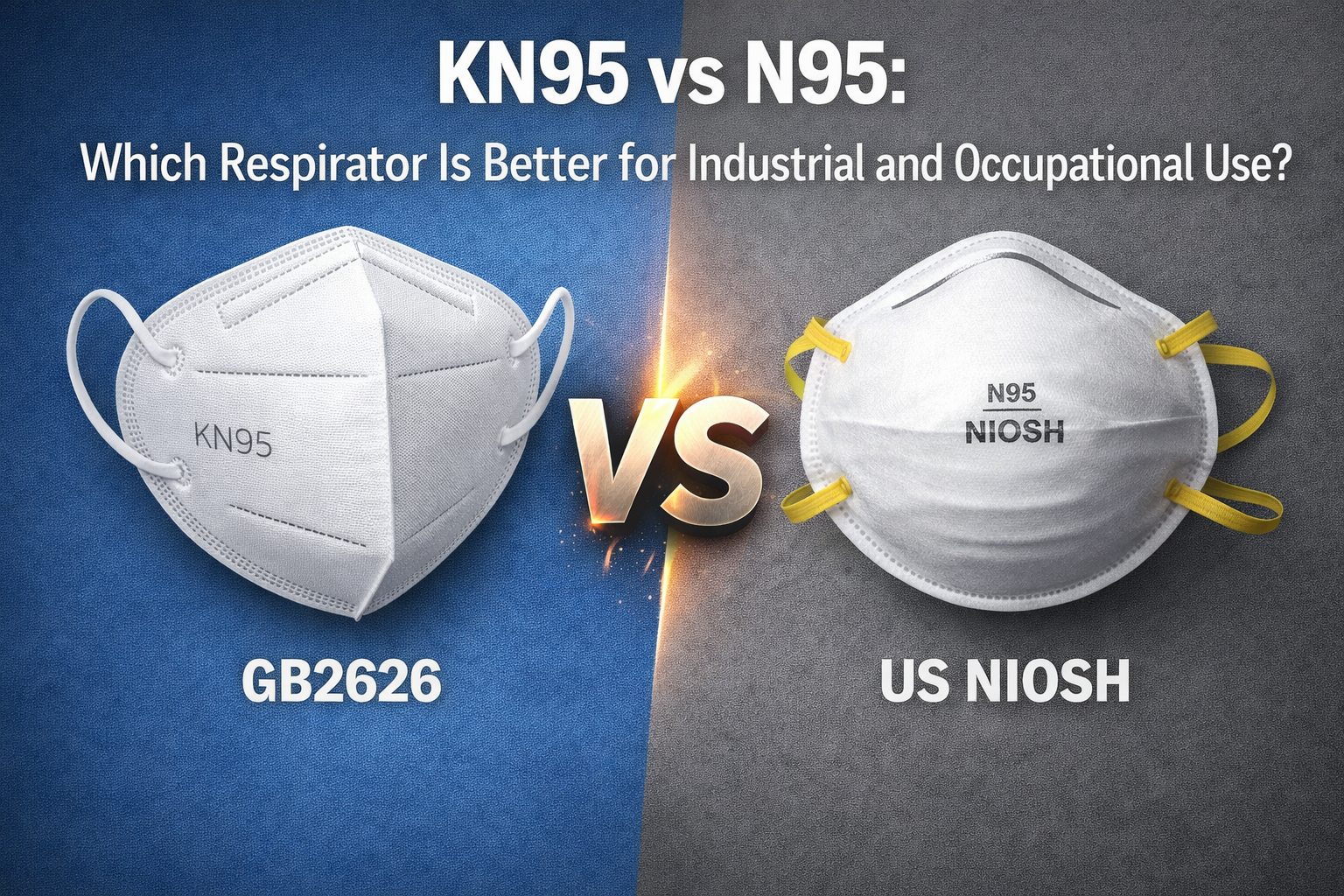
A KN95 respirator is certified under the Chinese standard GB2626 and is designed to filter at least 95% of non-oily airborne particles.
Typical characteristics:
Foldable or cup-style design
Ear-loop or headband versions
Widely used in industrial and infrastructure projects
Accepted in many international projects outside the U.S.
N95 Respirator
An N95 respirator is certified under the U.S. NIOSH standard and also filters at least 95% of non-oily airborne particles.
Typical characteristics:
Headband design for tighter fit
Strict testing and certification process
Commonly required in U.S.-regulated workplaces
Key Differences Between KN95 VS N95
| Comparison Factor | KN95 (mascarilla kn95) | N95 |
|---|---|---|
| Certification Standard | GB2626 (China) | NIOSH (USA) |
| Filtration Efficiency | ≥95% | ≥95% |
| Fit Requirement | Good seal (varies by model) | Tight fit (fit-tested) |
| Typical Design | Ear loop or headband | Ear loop or headband |
| Regulatory Acceptance | Widely accepted internationally | Mandatory in many U.S. industries |
| Cost Level | Generally lower | Generally higher |
| Availability | High, global supply | More restricted in some regions |
Which One Should You Choose?
Choose KN95 If:
Your project is outside the U.S. regulatory system
Cost efficiency is a major concern
You need large quantities for industrial or construction use
Local regulations accept GB2626-certified PPE
Choose N95 If:
The project is subject to U.S. OSHA or NIOSH regulations
Formal fit testing is required
Compliance documentation is strictly audited
Common Misunderstandings
“KN95 and N95 are exactly the same.”
They offer similar filtration efficiency but are regulated under different systems and acceptance varies by country.
“N95 is always better.”
Not necessarily. In many non-U.S. markets, KN95 is more practical and cost-effective.
“Any respirator with 95% filtration is acceptable everywhere.”
Regulatory compliance depends on jurisdiction, not filtration alone.
Real-World Application Scenarios
Construction projects in Asia, Africa, or the Middle East
→ KN95 is often sufficient and accepted.U.S.-based manufacturing or healthcare environments
→ N95 is usually mandatory.Large-scale infrastructure projects
→ KN95 preferred for cost and supply stability.
How This Relates to Medical Face Masks
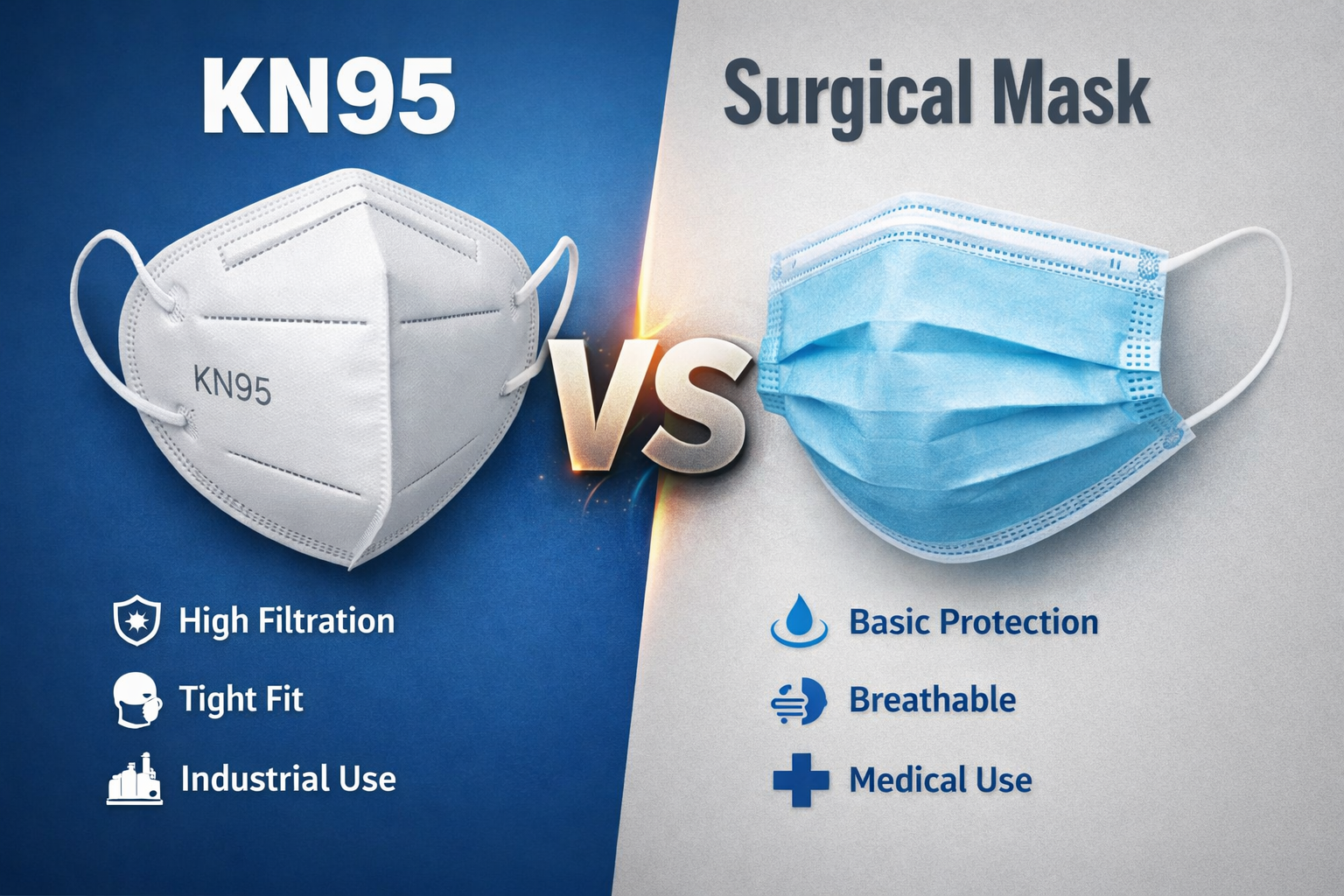
If your application does not involve dust, particles, or industrial exposure, a surgical mask may be more appropriate.
Final Guidance
The decision between KN95 and N95 should be based on regulatory environment, risk level, and operational needs, not marketing labels.
Choosing correctly helps control cost, ensure compliance, and avoid unnecessary procurement risk.
Internal Linking Suggestions
To strengthen SEO and topical authority, link this article to:
KN95 vs Surgical Mask: How to Choose the Right Option for Your Project
Medical Mask Standards Explained: EN14683 vs ASTM F2100
How to Choose PPE for Construction and Industrial Projects
Common PPE Mistakes in Industrial Procurement