A Practical Guide for Safety Managers and Procurement Teams
When selecting protective masks for industrial workers, the decision is rarely about choosing the “best” product.
It’s about choosing the most appropriate level of protection based on exposure risk, work environment, and operational cost.
Many procurement teams make the mistake of treating all face masks as interchangeable. In reality, industrial workplaces demand a very different approach from medical or public settings.
This guide focuses on how to choose the right face mask for industrial and occupational use, using practical criteria rather than product marketing.
Understanding Industrial Exposure Before Choosing a Mask
Before selecting any type of respiratory protection, the first question should always be:
What are workers actually exposed to?
Industrial environments typically involve one or more of the following risks:
Airborne dust and fine particles
Metal or mineral residues
Smoke or fumes from machinery
Long working hours in semi-enclosed spaces
The level and type of exposure determine whether a basic face covering, a particulate respirator, or a higher-grade solution is required.
Common Mask Types Used in Industrial Settings
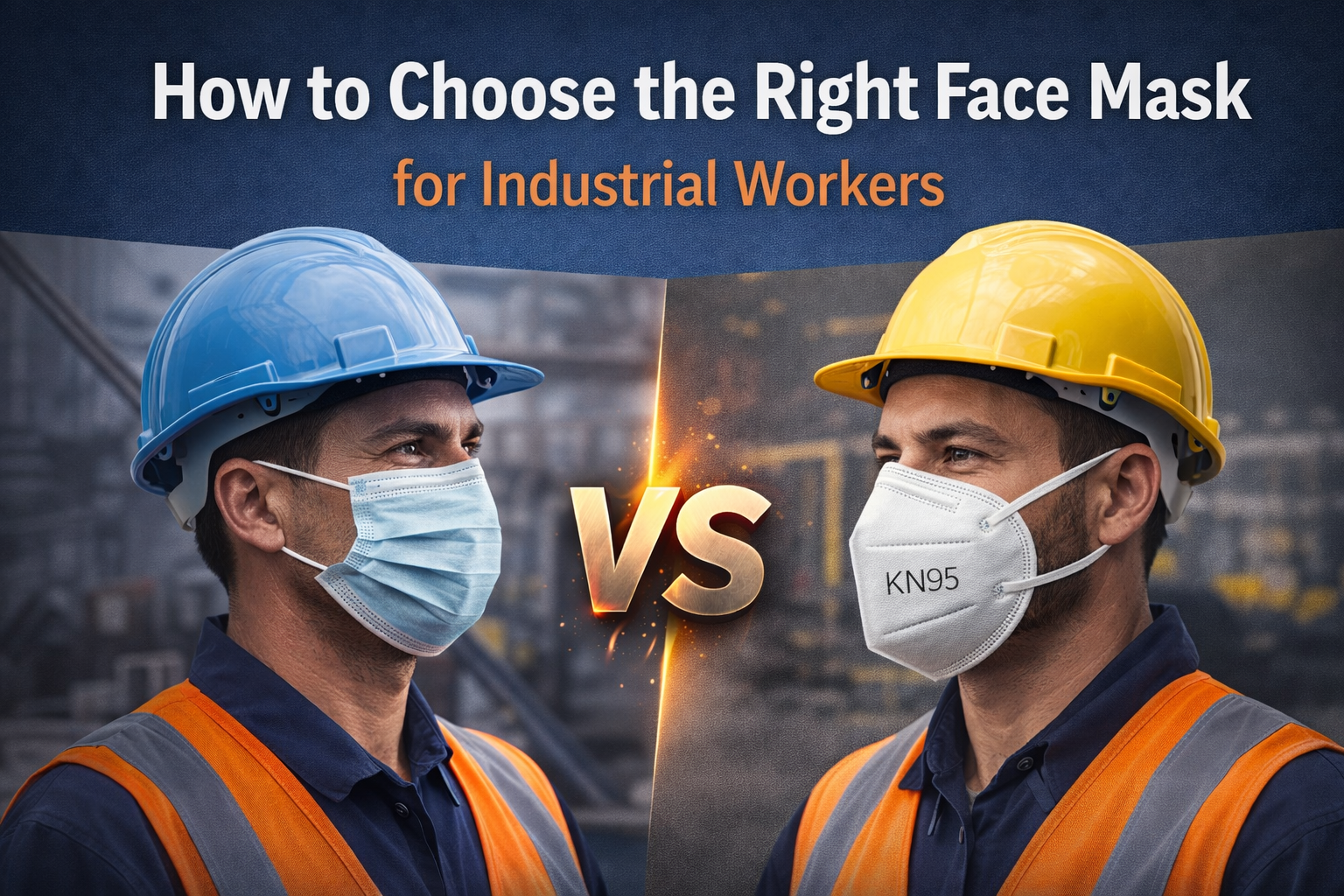
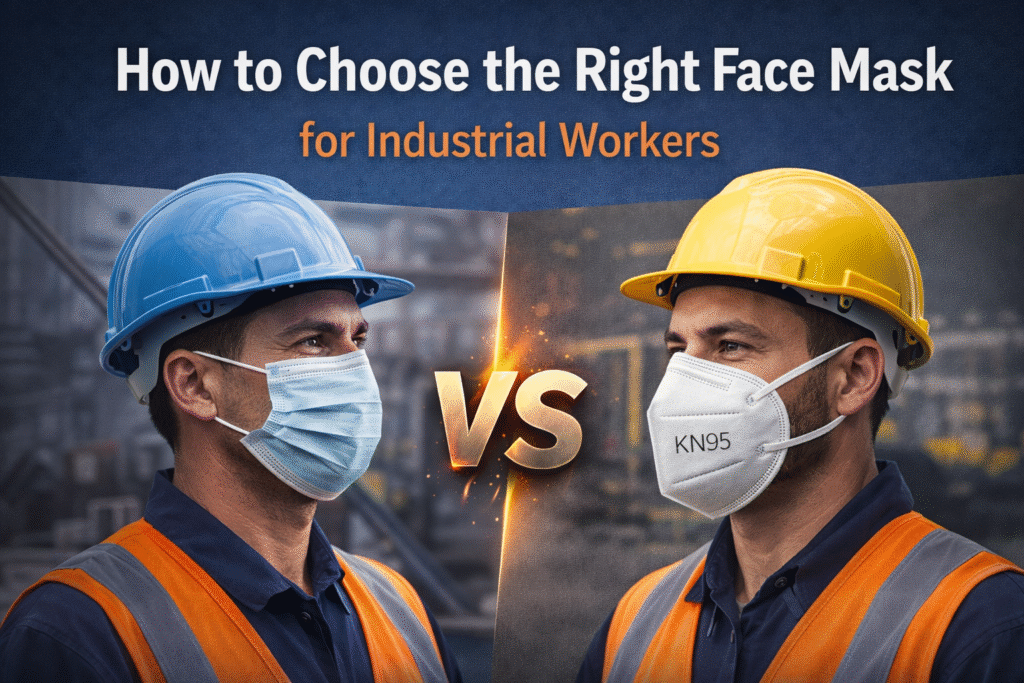
Disposable Face Masks (Medical or General Use)
These masks are often used because they are affordable and easy to distribute.
Typical characteristics:
Loose fit
Designed to block droplets and splashes
Suitable for low-risk environments
Common use cases:
Warehouses with minimal dust
Clean assembly areas
Visitor or temporary staff protection
They are not intended for dust filtration and should not be used where airborne particles are present.
Particulate Respirators (KN95 / Similar Standards)
Respirators such as KN95 are designed specifically for filtering airborne particles.
Typical characteristics:
Higher filtration efficiency
Tighter facial seal
Designed for occupational exposure
Common use cases:
Construction sites
Mining and quarry operations
Manufacturing plants with airborne debris
These masks provide a higher level of protection but require proper selection and fit.
How to Decide Which Mask Is Appropriate
Instead of asking “Which mask is better?”, a more useful question is:
“What level of protection does this task actually require?”
Key Factors to Evaluate
Type of exposure: dust, particles, or splashes
Duration of exposure: short-term vs long shifts
Work intensity: physical labor increases breathing demand
Regulatory expectations: local or project-based safety rules
Cost vs frequency: one-time tasks vs daily operations
Practical Comparison: General Mask vs Respirator
| Factor | General Face Mask | KN95 / Similar Respirator |
|---|---|---|
| Protection focus | Droplets, basic barriers | Fine particles, dust |
| Fit | Loose | Tight seal |
| Comfort level | High | Moderate |
| Suitable for long shifts | Yes | Limited |
| Industrial compliance | No | Yes |
| Typical use | Light-duty environments | Heavy-duty workplaces |
Common Mistakes in Industrial Mask Selection
Using medical-style masks in dusty environments
Choosing the highest-rated mask without considering comfort
Ignoring local safety regulations
Assuming one mask fits all tasks
These mistakes often lead to increased cost, poor compliance, or worker dissatisfaction.
Real-World Use Cases
Construction & Infrastructure Projects
Respirators such as KN95 are often required due to dust exposure.Manufacturing & Assembly Lines
Selection depends on material type and airborne particle levels.Logistics & Warehousing
Light protection may be sufficient unless dust is present.
How This Connects to Other Mask Types
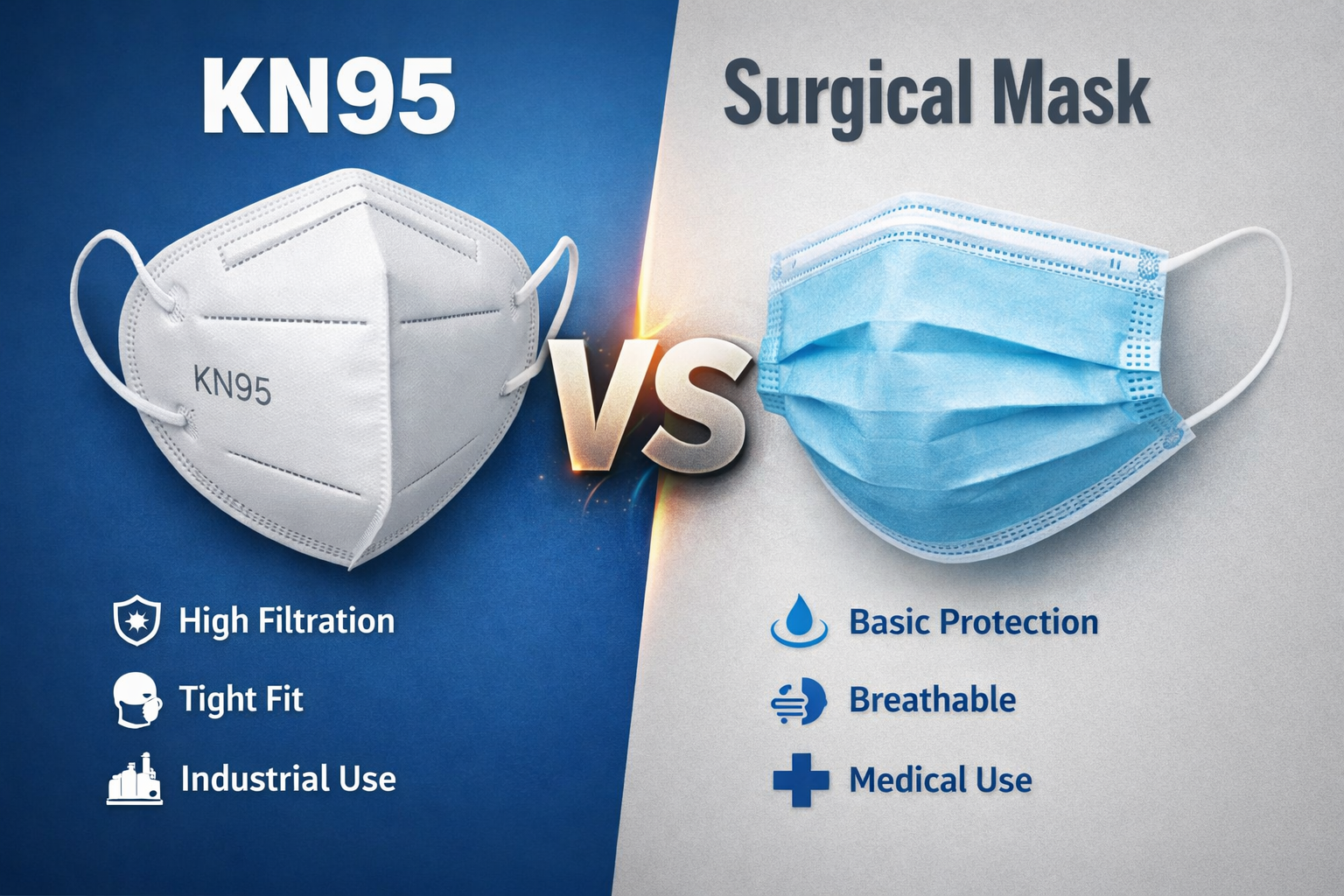
If your application involves healthcare or hygiene-sensitive environments, a surgical mask may be more appropriate.
You may also want to review:
KN95 vs Surgical Mask: How to Choose the Right Option for Your Project
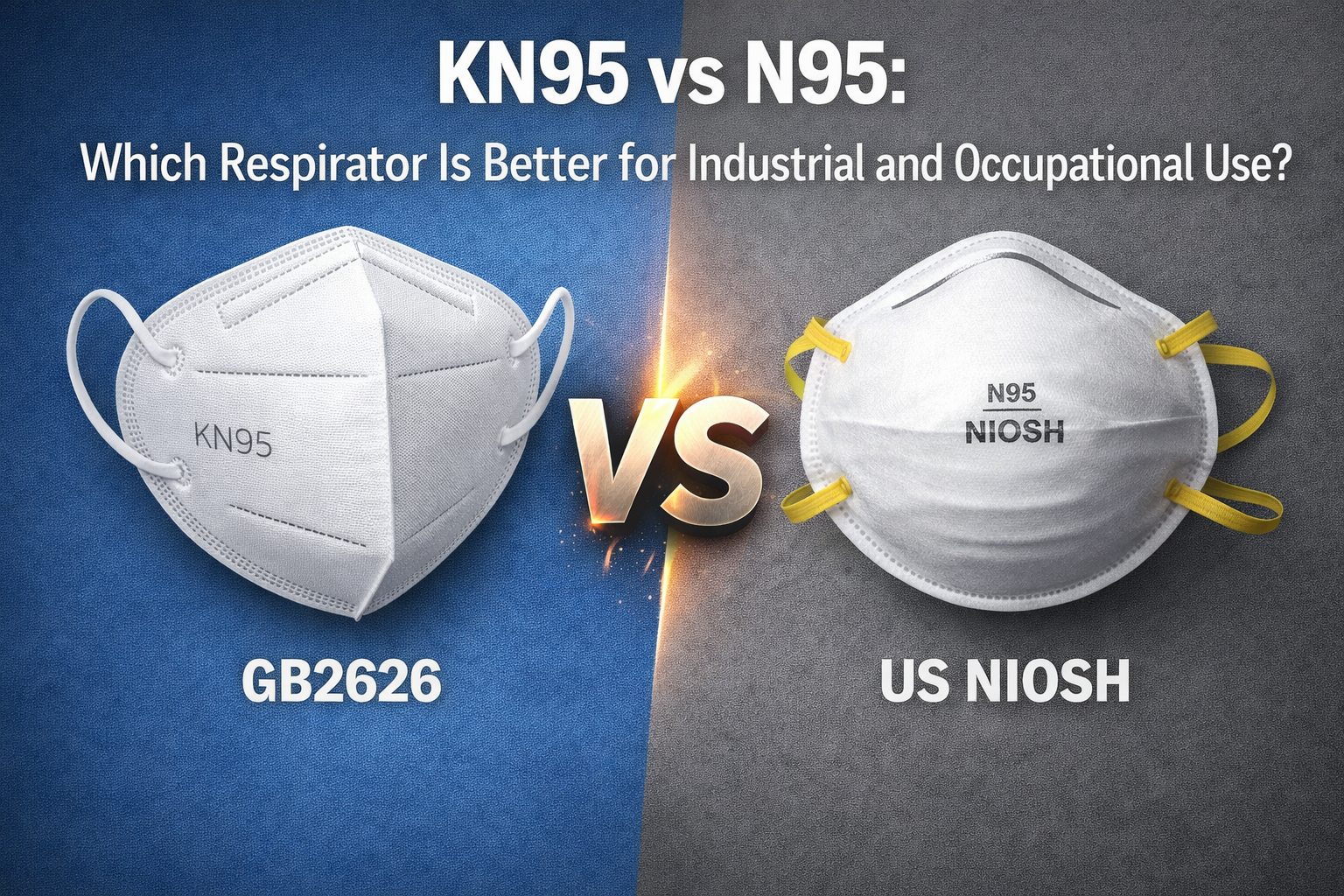
KN95 vs N95: Which Respirator Is Better for Industrial Use?
These comparisons help clarify when higher filtration is necessary—and when it is not.
Final Thoughts
Selecting protective masks for industrial use is not about choosing the strongest option, but about choosing the right level of protection for the actual risk.
Understanding exposure, environment, and compliance requirements will always lead to better decisions than relying on labels alone.