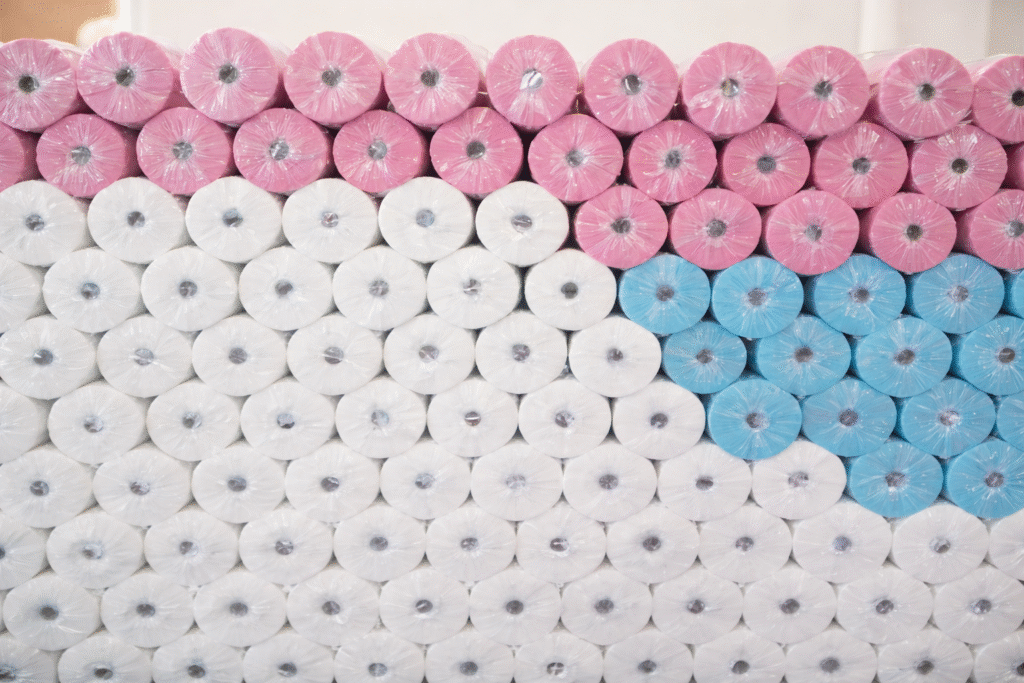
Choosing disposable bed sheet rolls often looks simple on paper. Many buyers assume it’s just a roll of nonwoven fabric. But in real procurement, small specification mistakes frequently lead to poor user experience, complaints, or unnecessary cost increases.
As a disposable bed roll manufacturer working with SPA chains, distributors, and OEM buyers, we’ve seen that the biggest issues rarely come from price—they come from material mismatch, GSM misjudgment, or incorrect opening design.
This guide explains how to choose the right disposable bed roll specifications for bulk purchasing, based on real application needs.
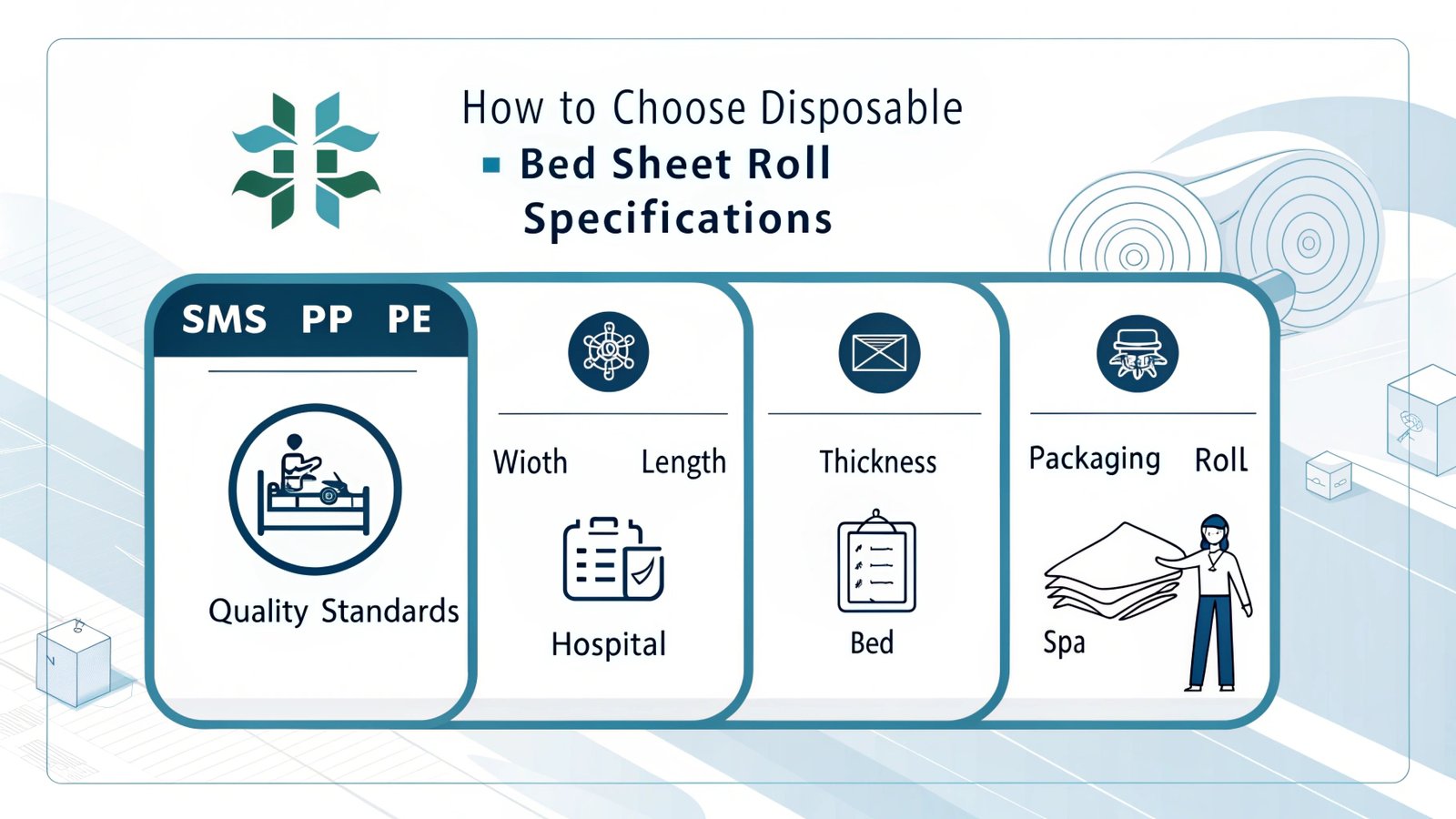
Why Choosing the Right Disposable Bed Roll Is More Complex Than It Looks
A buyer once told us:
“It’s just a bed roll—why is there so much discussion?”
Two months later, they came back with feedback from their SPA clients:
- The roll tore unevenly
- Oil penetrated the fabric
- Therapists complained about repositioning during use
All these problems traced back to wrong material choice and opening structure, not manufacturing defects.
That’s why professional buyers treat disposable bed rolls as functional hygiene products1, not generic consumables.
What Is a Disposable Bed Roll and Where Is It Commonly Used?
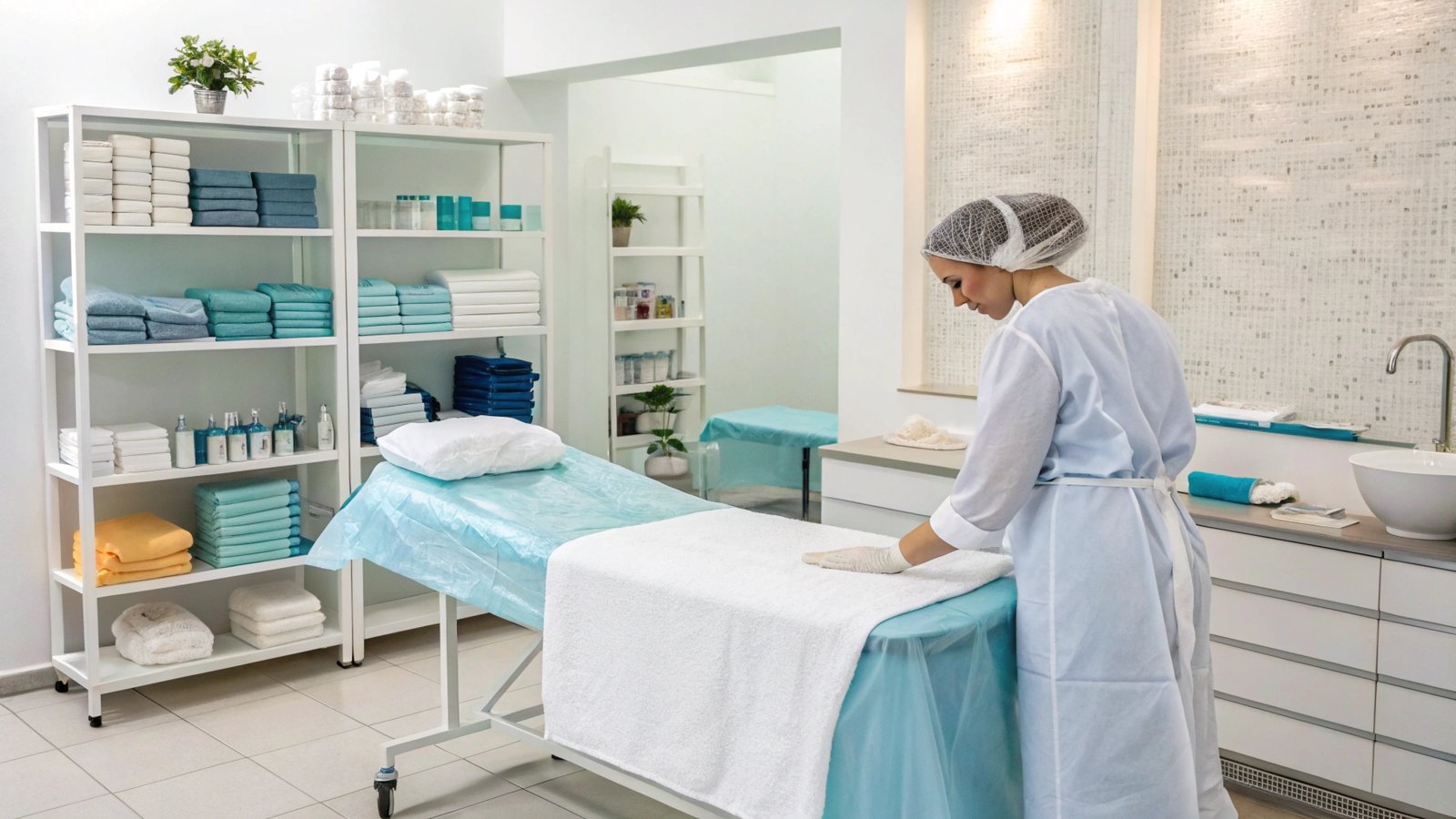
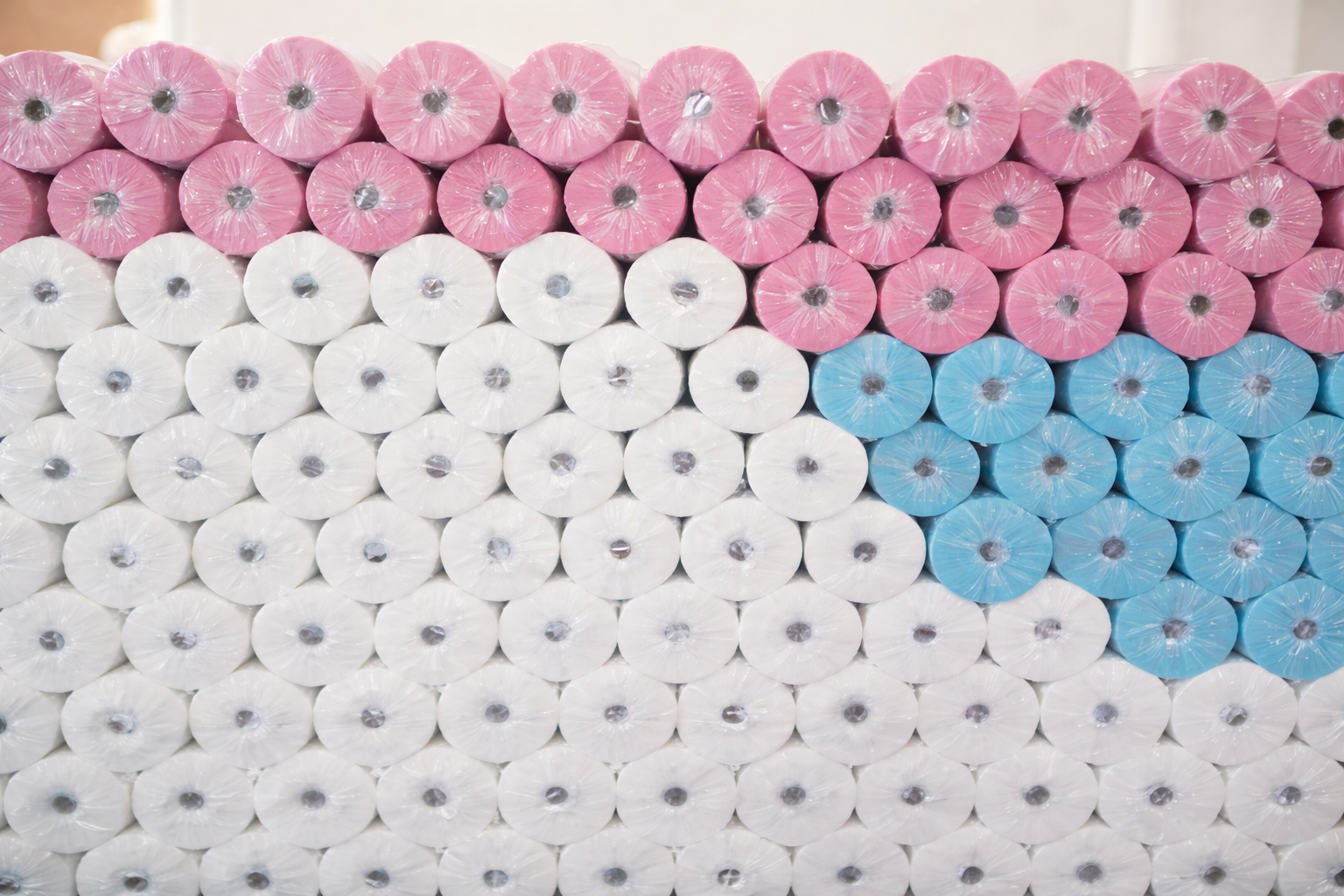
Disposable bed rolls are single-use protective covers designed for beds, massage tables, and treatment surfaces to maintain hygiene and reduce cleaning time.
Common Application Scenarios
- SPA & massage centers – facial beds, massage tables
- Medical clinics – examination and treatment beds
- Beauty salons – cosmetic procedures
- Nursing & hygiene use – daily protection

Each scenario places different demands on liquid resistance, strength, comfort, and ease of use.
Disposable Bed Roll Materials Explained: PP, PP+PE, and SMS
Choosing the wrong material is one of the most common sourcing mistakes.
PP Material – Lightweight & Cost-Effective
PP nonwoven2 is suitable for dry environments such as facial treatments or short procedures.
It’s lightweight, breathable, and economical.
PP+PE Material – For Oily or Wet Environments
PP+PE laminated material provides a waterproof surface, making it ideal for oily back massage or body treatments.
Oil and liquids will not penetrate, keeping tables clean.
SMS Material – Higher Tear Strength
SMS offers better tensile strength and uniformity, making it suitable for massage applications where the roll is frequently pulled and repositioned.
Material Comparison Table
| Material | Best Use | Key Advantage | Limitation |
|---|---|---|---|
| PP | Facial / dry use | Lightweight, low cost | Not waterproof |
| PP+PE | Oily massage | Waterproof surface | Less breathable |
| SMS | Massage & durability | Higher tear strength | Higher cost |
GSM Selection: Why Too Low GSM Often Causes Quality Problems
GSM (grams per square meter)3 directly affects thickness, strength, and comfort.
Lower GSM reduces cost, but when GSM is too low, fabric uniformity becomes difficult to control during production, especially in bulk manufacturing.
We once worked with a buyer from Kazakhstan who requested PP 12g GSM to meet a strict price target. During trial production, maintaining even fabric density was extremely challenging, which resulted in unstable tear performance and inconsistent roll quality.
Recommended GSM Ranges for Different Applications
Choosing GSM should never be arbitrary. The right GSM depends on how the bed roll is used, how often it is pulled or repositioned, and whether liquids or oils are involved.
Below are practical GSM ranges based on real production and application experience.
GSM Recommendation by Application
| Application Scenario | Recommended GSM Range | Reason |
|---|---|---|
| Facial treatment / beauty salons | 15–20 GSM | Lightweight, cost-efficient, suitable for short and dry procedures |
| SPA & massage centers (dry massage) | 20–25 GSM | Better comfort and tear resistance during frequent movement |
| SPA & massage centers (oily massage) | 20–25 GSM + PE lamination | GSM provides structure, PE layer prevents oil penetration |
| Medical clinics / examination beds | 18–23 GSM | Balanced durability and hygiene for single-use applications |
| Nursing & daily hygiene protection | 18–22 GSM | Cost control with acceptable strength |
| High-end SPA / premium positioning | 25–30 GSM | Enhanced comfort, premium feel, lower complaint rate |
Manufacturer Insight: Why GSM Has a Practical Lower Limit
From a manufacturing standpoint, PP material below 15 GSM is risky for large-scale production:
- Fabric density becomes unstable
- Tear lines are inconsistent
- Roll strength varies between batches
Even if a single sample looks acceptable, bulk consistency often fails.
Manufacturer recommendation:
If low GSM is required for cost reasons, always request multiple batch samples, not just one prototype.
Opening Types: Round Hole, Cross Cut, or Standard Perforation?
Opening design significantly affects usability and therapist experience.
Round Hole Opening
- Clean, precise tearing
- Suitable for oily massage and medical use
- Provides stable coverage
Cross Cut (X-cut)
- Softer tear feel
- Preferred by many SPA therapists
- Better alignment on beds
Standard Perforation
- Lowest cost
- Suitable for general-purpose or high-volume distribution
Opening Type Comparison Table
| Opening Type | Best Application | User Experience | Cost Level |
|---|---|---|---|
| Round Hole | Medical / oily massage | Precise & stable | Medium |
| Cross Cut | SPA / massage | Comfortable & flexible | Medium–High |
| Standard Perforation | General use | Basic & functional | Low |
OEM & Private Label Options from a Disposable Bed Roll Manufacturer
OEM adds value only when it improves usability or channel acceptance.
Effective OEM usually focuses on:
- Cut type customization
- Stable GSM & size
- Packaging clarity
- Consistent batch quality
Over-designed printing or unnecessary variations often increase risk without improving sales.
How to Buy Disposable Bed Rolls in Bulk from China (RFQ Checklist)
To avoid miscommunication, your RFQ should include:
- Target market & application
- Material type
- GSM range
- Opening type
- Packaging format
- Trial order quantity
- Monthly forecast
Clear RFQs lead to faster quotations and fewer production issues.
FAQ – Disposable Bed Roll Bulk Buying Questions
Q: Which material is best for oily massage?
PP+PE laminated material.
Q: Is higher GSM always better?
Not always. GSM should match application needs.
Q: Can opening type be customized for OEM orders?
Yes, opening design is fully customizable.
Conclusion
Choosing the right disposable bed roll is not about selecting the cheapest option.
It’s about matching material, GSM, and opening design to real usage scenarios.
Working with an experienced disposable bed roll manufacturer in China helps ensure your product performs consistently, scales smoothly, and meets market expectations.